We act for foreign companies chasing unpaid invoices, undelivered orders and deposits held by Chinese counterparties — from the first demand letter through asset preservation, litigation or arbitration, and enforcement. Beijing-based, China-qualified, working in English.
Two things decide whether you get paid, and both are about time. First, whether the debtor still has assets when you finally have a judgment — which is why freezing assets early matters more than anything else in this process. Second, your three-year limitation period (Civil Code Art. 188), which is running now.
Before a debt exists: prevent an avoidable loss
Many low-value cross-border claims are uneconomic to pursue once money or goods have gone. If the transaction has not yet been performed, identify the actual Chinese counterparty, verify unusual instructions independently, and cap the first amount at risk. A warning sign calls for a check; it does not, by itself, establish fraud.
Selling to a Chinese buyer? Before shipping on credit, confirm which registered company owes the price, set an aggregate unpaid limit, and select payment terms that fit the size of the order. Use our pre-shipment credit and payment checklist.
What to do in the first 72 hours
Before you instruct anyone — including us — these steps cost nothing and protect your position:
Stop performing. Do not ship the next order, release the next batch, or hand over further tooling, moulds or IP. Leverage you still hold is worth more than leverage you are owed.
Freeze the paper trail, don't clean it up. Keep contracts, purchase orders, invoices, packing lists, bills of lading, inspection reports — and the chat records. WeChat and email exchanges are routinely accepted as evidence by Chinese courts, and an admission in a WeChat message is often the strongest document in the file. Export them now, before an account is deleted.
Do not sign anything that resets the clock in their favour. A "revised payment plan," a reconciliation statement or a settlement that quietly waives interest or extends terms can cost you the leverage — and sometimes the claim. Take advice before signing.
Confirm who the debtor actually is. You need their exact Chinese registered name and Unified Social Credit Code — not the English trading name on the invoice. The two often do not match, and the entity that signed may not be the entity that has the money.
Look for the warning signs of asset stripping. A recent change of legal representative, registered address, or shareholders — or a new company with a near-identical name at the same address — usually means the assets are moving. That changes the urgency of everything below.
Check the clock. The general limitation period is three years from when you knew, or should have known, that your right was infringed and who the obligor was. It can be interrupted — but do not assume it has been.
Bought from China and the supplier is the problem? Non-delivery, a refund that never comes, or defective goods have their own first steps. See China supplier disputes.
The single most common mistake Waiting. Foreign creditors typically spend three to six months on polite reminders and "he keeps promising" before taking advice. That is exactly the window a debtor uses to move assets, and it is time you cannot buy back. If the sums matter, get the position assessed early — even if you then decide to keep negotiating.
How the process actually works
Five stages. Not every case runs all five — most settle somewhere in the middle, which is usually the better outcome.
Recovering a debt in China — stages and realistic timings
Stage
What happens
Typical time
1. Verify & trace
Confirm the debtor's registered identity, check litigation and enforcement history, look for assets and for signs they are being moved. Assess your evidence honestly.
Days
2. Lawyer's demand letter
A formal letter from a licensed Chinese firm, on the firm's letterhead and under its chop, sets a deadline and interrupts the limitation period. Many debtors who ignore a foreign creditor respond to a Chinese law firm.
1–2 weeks
3. Asset preservation
Apply to freeze bank accounts, receivables or property. The court decides within 48 hours in urgent cases; security is required. This is where most of your leverage comes from.
Days
4. Litigation or arbitration
Whichever your contract requires. Foreign-related cases are not subject to the statutory trial time limits, though courts generally still aim to close a first-instance case within about six months.
6 months+
5. Enforcement
Apply to the court's asset-control system; the debtor can be added to the dishonest judgment debtor list, restricting flights, high-speed rail and borrowing. You have two years from the judgment deadline to apply.
Months
Freezing assets: the part that decides whether you get paid
A judgment against a company with no money is a piece of paper. Asset preservation — applying to the court to freeze bank accounts, receivables or property before or during proceedings — is what converts a claim into pressure. Three practical points:
Pre-litigation preservation buys you 30 days. If the court grants it before you file, you must commence proceedings within 30 days or the freeze is lifted. It is a sprint, not an option to sit on.
You must post security. Chinese courts require the applicant to secure the respondent against a wrongful freeze. In practice this is commonly handled through a preservation liability insurance policy rather than cash, which changes the economics considerably for a foreign claimant.
A frozen account settles cases. Once payroll or supplier payments stop moving, a debtor who ignored six months of reminders often finds the money within days.
Court fees in China are fixed by regulation and are modest by Western standards — the case acceptance fee is calculated on a sliding scale against the amount claimed, and is generally borne by the losing party.
Court acceptance fee, calculated under the Measures on Payment of Litigation Costs
Amount claimed
Acceptance fee
RMB 100,000
RMB 2,300
RMB 500,000
RMB 8,800
RMB 1,000,000
RMB 13,800
RMB 5,000,000
RMB 46,800
RMB 10,000,000
RMB 81,800
The fee is halved where a case is heard under the simplified procedure, withdrawn, or closed by court-facilitated settlement. The separate preservation application fee is capped at RMB 5,000 however large the claim. Legal fees are additional and, unless your contract shifts them, each side generally bears its own — which is why the fee-shifting clause in your next contract is worth more than it looks.
We will tell you when it is not worth it. If the debtor is already on the dishonest-debtor list with nothing left to attach, or the sum is too small to justify the cost, our advice will be to write it off or settle cheaply. You will get that answer at the assessment stage, not after the fees.
We do not publish success rates or recovery rates, and we will not promise you an outcome. No lawyer can know whether a particular debtor will still have assets in nine months. Anyone who guarantees recovery is selling you something.
We are a licensed Chinese law firm, not a collection agency. We can act for clients in Chinese proceedings and advise on preservation and enforcement. Any risk-based fee arrangement must be agreed in writing and comply with the rules applicable to the particular matter; we do not promise a fixed percentage or recovery outcome.
We work alongside your own counsel. We act on the Chinese side; where your matter needs advice under your own law, you will instruct that separately.
Frequently asked questions
Can I sue a Chinese company if my contract says arbitration in my own country? You are generally bound by the clause you signed. The good news is that a foreign arbitral award is far easier to enforce in China than a foreign court judgment — China is a party to the New York Convention, and the large majority of foreign awards presented to Chinese courts are recognised and enforced. A foreign court judgment is much harder, turning on treaty or reciprocity.
How long do I have to bring a claim? The general limitation period under the Civil Code is three years from when you knew, or should have known, of the infringement and of the obligor. It can be interrupted — by a demand, by the debtor's acknowledgment, or by commencing proceedings — but you should never assume an informal reminder has done so.
Can you freeze their bank account before we sue? Yes, pre-litigation preservation is available where there is urgency. The court can decide within 48 hours, you must provide security (often through a preservation insurance policy rather than cash), and you must then commence proceedings within 30 days or the freeze is lifted.
The company that owes me appears to be a shell. Is that the end? Not necessarily. Where registered capital was subscribed but never paid in, a creditor can apply during enforcement to add the shareholder as a person subject to enforcement, up to the amount left unpaid. The Supreme People's Court provisions on changing and adding parties in civil enforcement set out twelve such situations; unpaid capital contribution is the most common entry point, and a one-person company whose shareholder cannot prove its assets are separate from the company's faces joint liability for the whole debt. Under the 2024 Company Law subscribed capital must be paid within five years of establishment, so it is one of the first things worth checking.
Do I have to come to China? Usually not. We act under a power of attorney, and foreign clients are rarely required to attend in person. Documents executed abroad may need notarisation and an apostille — since 7 November 2023 China is in the Apostille Convention, which removed the old consular legalisation step for member states.
Is it worth it for a small amount? Often not, and we will say so. Court fees are modest, but legal costs, translation, evidence authentication and your own time are not. Below a certain figure the honest answer is to negotiate, set it off against future orders, or write it off — and to fix the contract so it does not happen again.
Who you would be dealing with
Aaron Lv (吕喆)
Partner, Beijing Gaojin Law Firm · Licensed to practise in China since 2004
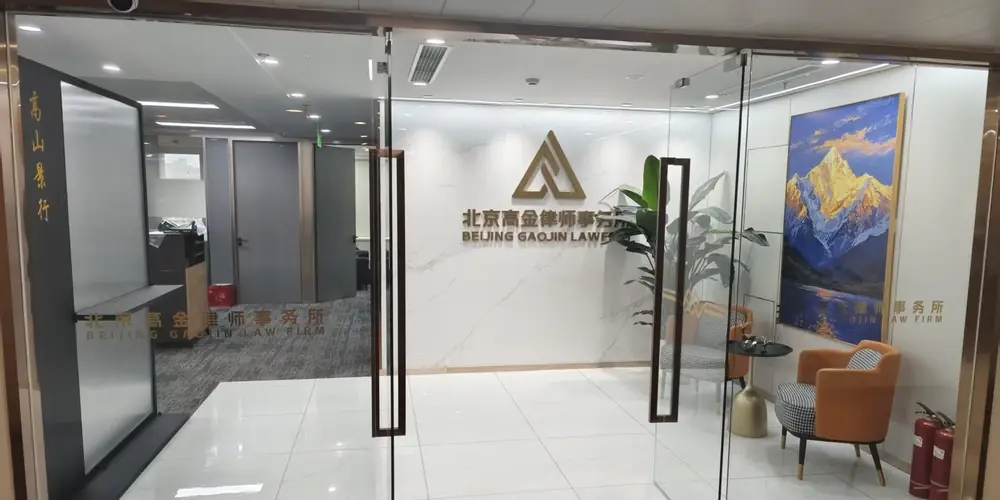
Debt recovery attracts people who are not lawyers and not in China. We are a licensed PRC law firm with our own office in central Beijing, the engagement letter is signed with the firm, and fees are paid to the firm's own corporate account — never to an individual.
Room 1226-1, 12/F, Tower 2, Guanghua Chang'an Building, 7 Jianguomennei Avenue, Beijing 100005. Our own photographs, not stock images — see our practising licence and bar record.
This page is general information for foreign companies, not legal advice on any specific matter. Rules and practice change; please take advice on your facts.
Tell us what happened
Send the contract, the invoices and the last exchange with the debtor. We will tell you what the realistic options are — including if the honest answer is not to sue.